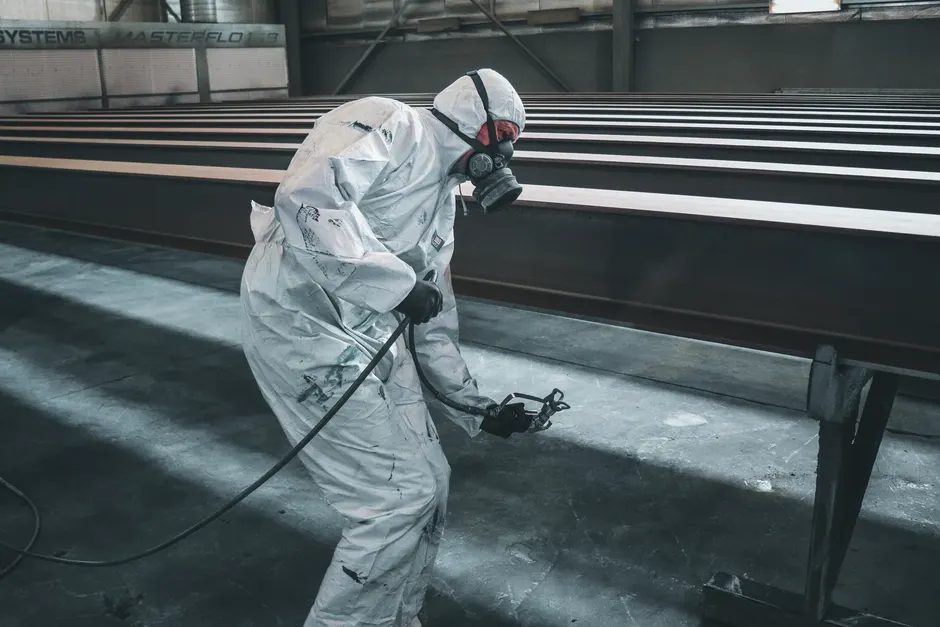
Full site survey and sampling
We attend, take core samples, identify open cell, closed cell or mixed polyurethane foam, measure square metreage and check the deck and purlins with a moisture meter. You get a written fixed quote within 24 hours.
Every Lancaster warehouse removal is quoted as a complete package, so you are not chasing separate invoices for waste, access or paperwork. The list below is standard on all our commercial jobs. Reinstatement insulation, timber repairs and cavity wall work are priced separately once we have seen the deck.
We attend, take core samples, identify open cell, closed cell or mixed polyurethane foam, measure square metreage and check the deck and purlins with a moisture meter. You get a written fixed quote within 24 hours.
Cutting, thermal and dry ice blasting methods are chosen to suit the foam type and substrate. Crews work in bays with an industrial vacuum at the cutting face, so dust stays contained and your operation keeps running.
All removed foam is bagged on site and routed through licensed waste handlers. You receive waste transfer notes for every load, which is what insurers and lenders ask for when a claim or valuation is being processed.
After extraction we inspect sheeting, fixings and purlins, take moisture readings and photograph every bay. Anything needing repair is flagged with a separate price, so you can decide before reinstatement begins.
You get a signed removal certificate, a full photographic record and copies of all waste documentation. This is the pack Lancaster surveyors and mortgage lenders accept as proof the foam has been properly stripped.
Warehouse spray Foam removal in Lancaster means mechanically cutting, blasting and vacuuming out open cell spray foam, closed cell spray foam and polyurethane foam that has been applied to roof decks, purlins and wall panels. It is not a scrape-and-paint job. Foam bonds to steel, timber and felt, so we use spray foam cutting tools, thermal removal tools and dry ice blasting machine rigs to break the bond without tearing through the substrate. Every load of removed foam is bagged, logged and taken away for licensed disposal.
Most Lancaster warehouses we attend were foamed between 2008 and 2018 as a cheap fix for condensation. In a maritime climate like ours, that foam traps moisture against the deck, and you get damp and condensation, structural timber rot and roof ventilation issues within a few seasons. Lenders now refuse mortgages on foamed commercial stock, so warehouse insulation removal Lancaster wide has become a condition of sale rather than a cosmetic upgrade. We also cover warehouse spray foam removal in Lancaster near me call-outs for units in Marsh, Bulk and Heysham.
Five stages, from first phone call to signed-off certificate. You get a named contact, a fixed price and a start date, not a vague window.
Schedule
Call or book online — a real human picks up and confirms a 2-hour arrival window.
Diagnose
Licensed tech inspects on-site, then walks you through the cause and your options.
Fix
The job is completed to code and done right the first time — no shortcuts, no surprises.
Guarantee
Every job backed by a written workmanship warranty — and we stand behind it.
Dry ice blasting machine
Freezes and cracks hard-bonded closed cell foam off steel decks without abrasion. Preferred on Lancaster warehouse roofs where scoring the sheeting would be costly.
Industrial vacuum
Runs continuously at the cutting face to capture foam dust at source. This is what keeps racking, stock and machinery clean while we work in bays.
Spray foam cutting tools
Long-handled blades and oscillating cutters for slicing through open cell and softer closed cell foam in controlled passes, protecting purlins and fixings underneath.
Thermal removal tools
Heat-based units that soften stubborn foam bonds. Slower than blasting but gentler on older timber purlins common in Lancaster's pre-1970s warehouse stock.
Moisture meter
Used at survey and again after extraction to record deck and purlin moisture. The before-and-after readings go into your report as evidence for lenders and insurers.
Safety PPE and PASMA access kit
Full working-at-height PPE, harnesses and mobile towers to PASMA standards. Asbestos Awareness procedures are followed before any blade touches an older Lancashire roof.
Bay-by-bay extraction
We divide the roof into bays and complete one at a time, sealing each with protective sheeting. This keeps dust contained, lets us inspect as we go and means your operation can continue in the rest of the building.
Dry ice blasting
Dry ice pellets are accelerated at the foam, freezing it so the bond to steel fails and the foam lifts in sheets. No abrasive sand, no water, no secondary cleanup, which is why it suits occupied Lancaster warehouses.
Thermal softening
For dense closed cell foam on timber, we apply controlled heat to soften the bond before cutting. It is slower per square metre but protects older purlins that would split under mechanical force.
Sand blasting finishing
Where residue remains on steel or masonry after bulk removal, abrasive sand blasting cleans the substrate back to bare metal. This is a finishing step before a new vapour barrier or coating goes on.
Waste segregation and routing
Foam, steel offcuts and timber are segregated on site and routed through licensed handlers. Every load is documented with a waste transfer note, which forms part of the pack your lender or insurer receives.
01
What we do: We survey within 48 hours, confirm the foam type and coverage, and give you a fixed removal price. Extraction is usually booked within a week and completed in three to five days for a typical Lancaster unit.
→ You get the removal certificate and photo pack your buyer's lender needs, and the sale can proceed without renegotiation on the roof.
02
What we do: We strip the foam, check the roof void ventilation and identify where the dew point has moved to. Where needed, we specify a compliant vapour barrier and insulation build-up before we leave site.
→ Drips stop, stock stays dry and your heating load drops. Most clients see condensation marks dry out within two to three weeks.
03
What we do: We attend, document the existing foam with photographs and moisture readings, remove it and issue waste transfer notes plus a removal certificate. We can liaise with your loss adjuster directly if the claim is open.
→ Your insurer gets the evidence pack it asked for, and the claim can be settled without a second site visit.
04
What we do: We carry out an insulation assessment, quote the removal as a fixed price and complete the work around the vacant possession window. No tenant disruption because there is no tenant.
→ The unit goes back to market with clean documentation, and the next valuation is not held up by the roof.
Lancaster's warehouse stock splits into three types, and each behaves differently. The port-side and Heysham units are mostly steel portal frame with profiled sheeting, where closed cell foam bonds hard and dry ice blasting is the fastest route. The older city centre and Bulk buildings have timber purlins and felt decks, so thermal removal tools are safer than mechanical cutting. The agricultural conversions out towards Caton and Galgate often have mixed systems, part open cell, part board, and need an insulation assessment before we quote. Our coastal climate is the common factor. Driving rain off Morecambe Bay and high humidity mean any foam that traps moisture against a cold deck will cause damp and condensation, roof ventilation issues and eventually structural timber rot. That is why warehouse insulation removal Lancaster wide is usually a lender or insurer requirement rather than an optional upgrade. We work to CHAS and SafeContractor standards, hold PASMA and Asbestos Awareness certification, and issue waste transfer notes with every load. If you need warehouse spray foam removal in Lancaster, Lancashire, and want a fixed price before you commit, call 03335672543 and we will book the survey.
Heysham
Port-side steel portal warehouses with hard-bonded closed cell foam. Dry ice blasting is usually the fastest and cleanest method here.
Bulk
Older industrial buildings with timber purlins and felt decks. Thermal removal tools protect the structure where mechanical cutting would risk splitting.
Marsh
Mixed commercial and distribution units, many foamed between 2010 and 2015. Condensation on racking is the most common complaint we get here.
Lancaster City Centre
Tighter access and shared walls mean we plan deliveries and waste removal around loading restrictions and neighbouring businesses.
Caton and Galgate
Agricultural conversions and rural units with mixed foam and board systems. These always start with an insulation assessment before quoting.
Coastal humidity off Morecambe Bay
High ambient moisture means foam traps damp against cold decks faster than inland. Removal is usually more urgent here, and we check ventilation routes on every Lancaster job.
Driving rain and exposed roof decks
Exposed sites near the coast suffer more sheeting corrosion under failed foam. We inspect fixings and sheeting during extraction and flag anything that needs attention.
Older timber purlin construction
Pre-1970s Lancaster warehouse stock uses timber purlins that rot quietly under trapped moisture. We meter every purlin and price any timber repair separately.
Restricted city centre access
Loading bays and shared yards limit where we can park plant. We plan waste routing and equipment drops around access windows so the job is not held up.
Foam that was sold as a cheap insulation fix has become a liability on thousands of Lancashire commercial buildings. These are the four issues we are called out to most often, and what happens if they are left alone.
Problem
Sales fall through, remortgages stall and buyers walk away. The building becomes effectively unmortgageable until the foam is removed and documented, which can cost you a buyer or a tenant.
Our Fix
We strip the foam, inspect the deck and issue the removal certificate and photographic pack your lender needs. Most Lancaster clients are back in a position to complete within four to six weeks of the first survey.
Problem
Foam on a cold steel deck hides the dew point, so water drips onto stock and machinery. Cardboard collapses, metal stock rusts and you end up replacing goods that should never have got wet.
Our Fix
Removing the foam restores airflow through the roof void. We check ventilation routes while we are up there and specify a compliant vapour barrier so the condensation problem does not simply return in a different form.
Problem
Trapped moisture rots timber purlins from the inside. Left for a few more seasons, a rotten purlin means roof loading problems, and that turns a removal job into a structural repair job.
Our Fix
We inspect every purlin with a moisture meter during extraction, photograph anything suspect and price the timber repair separately. Catching rot early on a Lancaster warehouse usually means replacing a section, not a whole roof.
Problem
Wet, failed foam insulates worse than nothing. You keep paying to heat a building whose roof is working against you, and the bills climb every winter without any visible cause.
Our Fix
Once the foam is out we specify insulation boards and a vapour barrier matched to your building. Most Lancaster units recover the cost of removal through reduced heating load over four to six winters.
Foam removal is disruptive, dusty and easy to get wrong. We plan the extraction around your shift patterns, protect stock and racking, and leave the deck ready for a compliant insulation system. Here is what that gets you.
Lenders sign off again
Mortgage refusal due to spray foam stalls sales and refinancing for months. Once the foam is out and the deck is inspected, your surveyor can confirm the roof structure is sound and the valuation can proceed. We provide photographic evidence and a removal certificate for your lender's file.
Condensation stops
Foam on a cold steel deck creates a hidden dew point. Removing it restores airflow through the roof void, so drips onto racking and stock stop. Most clients see condensation marks dry out within two to three weeks of extraction, once ventilation is reinstated.
Energy costs come down
Trapped damp foam performs worse than the insulation it replaced. We remove it and specify a vapour barrier and insulation boards that suit your building, so you stop paying to heat a wet roof. Typical Lancaster units recover the cost through reduced heating load over four to six winters.
No structural damage
Foam removal damage happens when crews rush with the wrong blades. Our technicians use thermal removal tools and controlled cutting to protect purlins, sheeting and fixings. We photograph every bay before and after, so you can see the deck came out clean.
Google ★★★★★4.9
Surveyed our Heysham unit on the Tuesday, fixed quote the next day, started the following Monday. Five days to strip 900 square metres of closed cell foam and the certificate arrived the same week. Lender accepted it without question.
Google ★★★★★5.0
Kept our Marsh warehouse trading throughout. Bays were sealed, vacuum ran constantly and there was almost no dust on the racking. Final invoice matched the quote exactly. Booking them for the second unit in spring.
Checkatrade ★★★★★4.8
They found rot in two purlins during extraction, photographed it and priced the repair separately rather than bundling it in. Honest, clean work and proper waste transfer notes. Rare to find that level of documentation locally.
Google ★★★★★4.9
City centre unit with mixed foam and board. They assessed it first, told us exactly what needed to come out and what could stay, and had the whole job done in six days. Unit let within two months of going back to market.
Spray Foam Removal Lancaster has been trading since 2022, and in that time we have built our work around one narrow specialism: getting spray foam out of buildings without wrecking them. Our technicians hold PASMA and Asbestos Awareness training, work to CHAS and SafeContractor standards, and are CITB-registered. We have stripped foam from warehouse roofs, distribution units, agricultural buildings and commercial workshops across Lancashire, and we know how BASF, Dow, Huntsman, Soudal, Fischer, Recticel, Kingspan and Icynene systems behave once they have cured for a decade.

Real answers to the questions we hear most often from local homeowners and property managers.
If you are searching for spray foam removal near me in Lancaster, we cover every district postcode. Same crew, same equipment, whether it is a warehouse roof or a domestic loft. Call and we will book a survey within 48 hours.
View Spray Foam Removal near meEmergency same day spray foam removal is available across Lancaster when a survey, sale or insurance deadline is tight. We keep a crew on standby for urgent warehouse call-outs, and can often survey and start extraction within 24 hours of your call.
View same day Spray Foam RemovalOur 24/7 spray foam removal line stays open for Lancaster warehouse managers dealing with leaks, storm damage or a failed inspection. Out-of-hours attendance is available for commercial sites where daytime working would stop your operation.
View 24/7 Spray Foam RemovalThe same extraction methods we use on Lancaster warehouses apply to homes with foamed lofts and rafters. If a mortgage valuation has flagged spray foam, we strip it, inspect the timber and issue the paperwork your lender needs.
View Residential Spray Foam RemovalCommercial spray foam removal covers Lancaster distribution units, workshops, retail back-of-house and agricultural buildings. We plan around your operating hours, protect stock with protective sheeting and provide waste transfer notes for every load removed.
View Commercial Spray Foam RemovalLoft spray foam removal in Lancaster is usually driven by a mortgage refusal or a cold, damp loft. We cut out the foam, check rafters for rot with a moisture meter, and reinstate ventilation so the roof space can breathe again.
View loft spray foam removalCall 03335672543 or email info@sprayfoamremovallancaster.com and we will book a survey, usually within 24 hours. We work Monday to Friday, 8am to 6pm, with a 24/7 emergency line for water ingress and storm damage. You speak to the person who will be on your roof.
Phone
03335672543Address
78 Church St, Lancaster LA1 1ET, UK, Lancaster, Lancashire
Hours
Mon–Fri: 7AM – 7PM
Sat: 8AM – 4PM
Sun: Emergency Only
24/7 Emergency Available