Spray Foam Removal Lancaster
Get Estimate

Roof spray foam removal in Lancaster done right, start to finish

We cut out failed foam, restore your roof and get lenders off your back


If spray foam is trapping damp in your rafters or a surveyor has flagged it, our roof spray foam removal in Lancaster gets it out cleanly. We handle open cell and closed cell foam, restore ventilation and leave the timber ready for a proper insulation spec. Covering Lancaster, Morecambe and the villages across Lancashire, with same-day surveys and fixed pricing before we start.

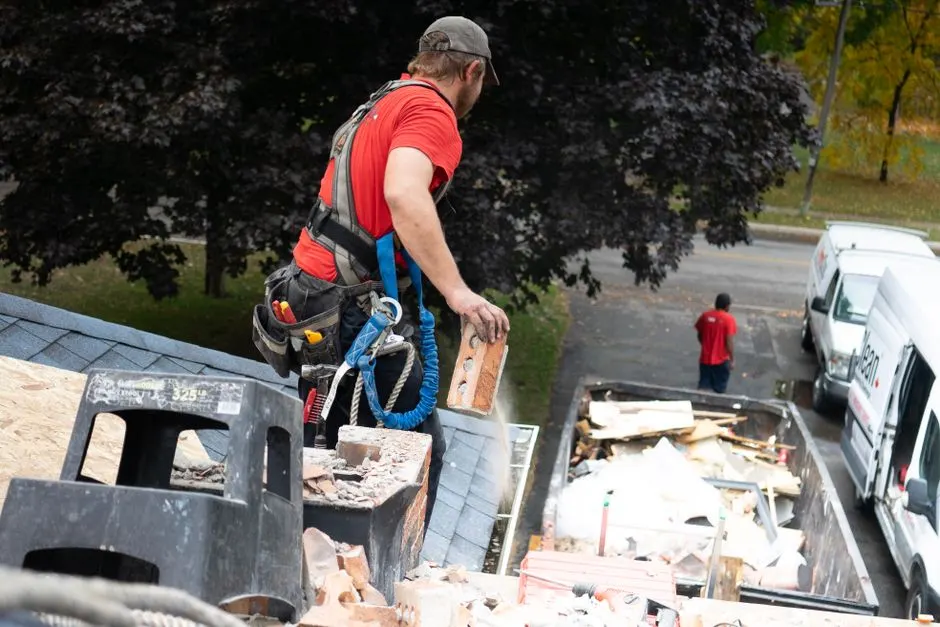
Worker in safety harness removes bricks from roof into dumpster below.
Licensed Licensed & Bonded
Fully Insured Insured & Bonded
24/7 Emergency Same-Day Response
Warranty Backed 4+ Years Trusted in Lancaster

What is included in roof spray foam removal

Every roof spray foam removal in Lancaster includes the survey, the removal itself, waste disposal and the photographic reporting your lender needs. Anything outside that scope, such as timber repairs or new insulation, is quoted separately and clearly before we start.

Full loft survey and moisture test

We take moisture meter readings across rafters, battens and felt, identify the foam type and thickness, and check for early signs of rot. You get a written fixed price the same day, usually within two hours of the survey.

Cutting and vacuum extraction

The bulk of the foam is cut away with spray foam cutting tools and lifted out with an industrial vacuum. A typical 60 square metre Lancaster roof takes one to two days at this stage, with extraction running throughout to keep dust down.

Dry ice or sand blasting of bonded foam

Foam that has cured hard onto timber is removed with dry ice blasting or sand blasting equipment. This gets the rafters back to bare, sound wood and adds roughly half a day on a standard job.

Waste disposal and site clearance

All removed foam leaves site under a licensed waste transfer note. We sheet the loft, seal the hatch and hoover the stairwell on the way out, so your home is clean and usable the same evening we finish.

Photographic report for lenders

You receive dated photographs of every rafter, moisture readings before and after, and a written summary of the work. This is the pack your surveyor or mortgage lender will ask for, and it is included as standard.

What roof spray foam removal in Lancaster actually involves


Roof spray foam removal in Lancaster means cutting, scraping or blasting out the polyurethane foam that has been sprayed onto the underside of your roof rafters or tiles, then cleaning the timber back to a sound surface. We use spray foam cutting tools, thermal removal tools and an industrial vacuum to lift the bulk of the material, then finish with dry ice blasting or sand blasting equipment where the foam has bonded hard to the wood. Every job starts with a moisture meter survey so we know exactly how far the damp has travelled.

Most Lancaster homeowners call us after a mortgage lender refuses to lend on a property with spray foam in the roof, or after a surveyor flags damp and condensation in the loft. Older terraces around Marsh, Freehold and Primrose are the usual suspects, but we also work on newer builds in Scale Hall and Heysham where closed cell foam was applied too thick and killed the roof ventilation. If you have searched roof spray foam removal in Lancaster near me and want a straight answer on cost and timescales, we will tell you on the survey.

How our removal process runs

Every roof spray foam removal job in Lancaster follows the same five stages. You get a fixed price after the survey, and you know what is happening on each day of the work.

01

Schedule

Call or book online — a real human picks up and confirms a 2-hour arrival window.

02

Diagnose

Licensed tech inspects on-site, then walks you through the cause and your options.

03

Fix

The job is completed to code and done right the first time — no shortcuts, no surprises.

04

Guarantee

Every job backed by a written workmanship warranty — and we stand behind it.

Tools and methods we use

Tools & Equipment

Dry ice blasting machine

Our first choice for bonded foam inside lofts. Dry ice pellets lift cured polyurethane off rafters without abrasive residue, so there is no secondary clean-up and no risk of gouging the timber.

Sand blasting equipment

Used on hard-to-reach rafters and roof decks where dry ice is impractical. We protect surrounding surfaces and run extraction throughout, because sand blasting creates far more dust than dry ice.

Spray foam cutting tools

Long-bladed saws and oscillating cutters take the bulk of the foam away quickly. On a typical 60 square metre Lancaster roof this stage removes around 80 percent of the material before blasting starts.

Industrial vacuum and insulation removal machine

A high-capacity vacuum lifts cut foam straight into sealed bags. The insulation removal machine handles the finer debris and keeps dust inside the work zone rather than drifting through your house.

Moisture meter

We take readings across rafters, battens and felt before and after removal. It is how we prove the roof has dried out and how we give your lender a measurable result rather than a promise.

Safety PPE and PASMA access equipment

Full PPE, dust masks and PASMA-compliant towers or ladders on every job. Older Lancaster roofs often have fragile felt and tight eaves, so safe access is planned before we start cutting.

Methods & Standards

Dry ice blasting

Dry ice pellets are accelerated at the foam surface, causing it to shrink and release from the timber. It is fast, leaves no abrasive media behind, and is safe around wiring and pipework. On a standard Lancaster loft it clears bonded closed cell foam in around half a day.

Sand blasting

For roof decks and rafters where dry ice cannot reach, we use controlled sand blasting. It is more aggressive, so we mask surrounding surfaces, run heavy extraction and work in sections to keep dust contained. Best suited to empty lofts and commercial roofs.

Thermal removal

Heat softens cured foam so it releases with less mechanical force. We use thermal removal tools on delicate or historic roof structures where we want to protect old rafters and avoid unnecessary damage to the timber.

Ventilation reinstatement

Once the foam is out we check the felt, battens and eaves vents and reinstate a continuous air path from eaves to ridge. This is the step that stops the damp coming back and is often what your surveyor is really looking for.

When Lancaster homeowners call us

01

A buyer's surveyor flags spray foam in the loft two weeks before exchange, and the lender refuses to proceed.

What we do: We survey within 24 hours, quote a fixed price and start work as soon as you accept. The whole job is usually done inside a week, with the photographic report emailed the same day we finish.

→ Your buyer's lender signs off, the sale completes, and you avoid losing the chain or dropping your asking price.

02

A 1930s semi in Scale Hall has closed cell foam sprayed between rafters and the loft smells damp every winter.

What we do: We cut out the foam, dry ice blast the rafters back to bare timber, and check battens for rot. We then restore the eaves-to-ridge ventilation gap and re-test moisture levels before handover.

→ Moisture readings drop below 20 percent, the damp smell goes, and the loft stays dry through the following winter.

03

A landlord in Freehold has tenants complaining about condensation and rising heating bills in a foamed loft.

What we do: We work around the tenants, sheet the loft and complete removal in two days. We supply a written summary and photographs so the landlord has a clear record for the property file.

→ Tenants stay in place, the damp complaint is resolved, and the landlord avoids a void period or a costly re-let.

04

A homeowner near the Lancaster University Area wants to convert the loft but the existing foam blocks any building control sign-off.

What we do: We remove the foam, verify the rafters are sound, and clear the deck ready for the conversion. We provide moisture readings and photographs that satisfy building control and the lender.

→ The loft conversion proceeds on schedule, with no delays waiting for foam removal or extra surveys.
How roof spray foam removal runs in Lancaster

Lancaster roofs take a beating. Driving rain off Morecambe Bay, cold winters and humid summers put real pressure on any foam that has been sprayed between rafters. The city's building stock makes it worse: Victorian terraces in Bulk and Primrose have shallow lofts and minimal ventilation, while 1930s semis in Scale Hall and Ryelands were built with eaves vents that foam installers often blocked completely. We also see a lot of closed cell foam applied too thick in newer properties around Heysham and Bare, where the roof was never designed to carry it. Because Lancaster sits in Lancashire, not a dry inland county, moisture is the constant enemy. Our approach is built around that: we test moisture before we quote, we dry ice blast rather than hack, and we reinstate ventilation as standard rather than as an extra. If you are searching for roof spray foam removal in Lancaster, Lancashire and want a firm that understands local roof construction, call 0333 567 2543. We survey the same day across Lancaster City Centre, Greaves, Scotforth and Torrisholme, and we work 24/7 for emergency water ingress.

Neighborhoods We Serve

  • Marsh

    Dense Victorian terraces with shallow lofts and limited ventilation. Foam here traps condensation fast, and we often find damp battens within two winters of installation.

  • Scale Hall

    1930s semis with eaves vents that foam installers frequently blocked. Restoring the air path is usually as important as removing the foam itself.

  • Heysham

    Coastal properties with driving rain off the bay. Closed cell foam applied too thick is common, and moisture readings are often the highest we see in the district.

  • Haverbreaks

    Larger detached homes with complex roof shapes and dormers. Removal takes longer here because access is tighter and there is more timber to clear.

  • Lancaster University Area

    A mix of student rentals and family homes. Landlords often need foam out quickly between tenancies, so we schedule around void periods.

Local Conditions We Plan For

  • Driving rain and high humidity off Morecambe Bay

    Coastal Lancaster roofs stay wet longer than inland properties. Foam that traps that moisture causes rot faster here, so we prioritise ventilation reinstatement on every Heysham and Bare job.

  • Victorian and 1930s roof construction

    Older Lancaster roofs were built to breathe, not to be sealed. Foam blocks the air path they depend on, which is why removal and ventilation work go hand in hand on terraces in Bulk and Primrose.

  • Cold winters and humid summers

    The temperature swing between seasons drives condensation against rafters. We take moisture readings in both conditions where possible, so the report we give your lender reflects the worst case, not the best.

  • Fragile felt and battens on older roofs

    Cutting foam off old felt can tear it if you are careless. We use dry ice blasting as our first choice inside lofts because it releases the foam without pulling at the felt underneath.

Mortgage refusal reversed in Marsh

Before

A three-bed Victorian terrace in Marsh had open cell foam sprayed between rafters in 2015. The buyer's lender refused to proceed, and the surveyor flagged moisture readings of 27 percent on the battens. The sale was two weeks from exchange.

After

We removed the foam over two days, dry ice blasted the rafters back to bare timber, and reinstated the eaves ventilation. Final moisture readings came back at 16 percent. The lender accepted our photo pack and the sale completed three weeks later.

Maintenance: Keep the eaves vents clear and check the loft once a year for any sign of damp. If you re-insulate, use breathable boards rather than foam and leave the ventilation gap open.

Before

A 1930s semi in Scale Hall had closed cell foam applied too thick between rafters, blocking the original eaves vents. The loft smelled damp every winter and the owner was seeing condensation on the roof felt by January.

After

We cut out the foam, sand blasted the bonded residue off the rafters, and cleared the blocked vents. Moisture readings dropped from 29 percent to 14 percent within a week. The damp smell cleared and the loft stayed dry through the following winter.

Maintenance: Check the eaves vents each autumn before the wet season and keep stored items off the rafters so air can move. Re-test moisture every couple of years if the roof is over 50 years old.

Before

A landlord in Freehold had tenants complaining about condensation and rising heating bills. The loft had a mix of old mineral wool and closed cell foam, and the foam had soaked up moisture and stopped performing as insulation.

After

We cleared the foam and old wool in two days, working around the tenants. Moisture readings dropped below 20 percent and the loft temperature stabilised. The landlord avoided a void period and the tenants stayed in place.

Maintenance: Re-inspect between tenancies and keep a written record of moisture readings. If you re-insulate, specify breathable materials and leave the ventilation path clear.

Problems we solve with roof spray foam removal

Spray foam causes a predictable set of problems in Lancaster roofs. Recognising them early saves money, and removing the foam properly stops them coming back.

Problem

Mortgage refusal due to spray foam in the roof

Your sale stalls, your buyer walks, and you lose months of chain progress. Some lenders will not even offer a retention until the foam is gone and the roof is verified.

Our Fix

We remove the foam, restore ventilation and supply a dated photographic pack showing every rafter. Your buyer's surveyor can sign it off and the sale moves again, usually within two to three weeks of us finishing.

Problem

Damp and condensation trapped against rafters

Moisture sits against timber that was never meant to be sealed. Left alone, structural timber rot can take hold within two or three winters and turn a removal job into a full roof repair.

Our Fix

We cut out the foam, blast the bonded residue back to bare wood and re-test moisture levels. Most Lancaster lofts drop from readings of 25 to 30 percent back to under 20 percent within a week of removal.

Problem

Blocked roof ventilation causing energy efficiency loss

Foam sprayed between rafters blocks the air path from eaves to ridge. The loft overheats in summer, condenses in winter, and your insulation performs worse than the loft roll it replaced.

Our Fix

We clear the foam, check felt and battens, and reinstate the ventilation gap. We can then specify insulation boards or a vapour barrier that actually performs, so your heating bills stop climbing.

Problem

Foam removal damage to plasterboard and felt

Careless removal tears felt, cracks plasterboard and leaves foam fragments behind that cause problems later. It also voids any lender report you were relying on.

Our Fix

We use dry ice blasting as our first choice inside lofts because it leaves no abrasive residue and does not gouge timber. Protective sheeting, sealed hatches and continuous extraction keep the rest of your home untouched.

Why Lancaster homeowners remove spray foam

Why Lancaster homeowners remove spray foam

Spray foam does not fail on its own timetable. It fails when it traps moisture against timber that was never meant to be sealed. Here is what proper removal gives you back.

  • Unblocks your mortgage

    Most high street lenders will not lend against a roof with spray foam, and some will not even offer a retention. Once the foam is out and the roof is verified, your buyer's surveyor can sign it off and the sale moves again. We provide photographic evidence of every stage for your lender.

  • Stops timber rot spreading

    Closed cell foam traps condensation against rafters and battens, and structural timber rot can take hold within two or three winters. Removing the foam and restoring airflow drops the moisture content back to safe levels, usually under 20 percent, before the rot becomes structural.

  • Restores proper ventilation

    A roof needs a continuous air path from eaves to ridge. Foam sprayed between rafters blocks it completely. We clear the foam, check the felt and battens, and reinstate the ventilation gap so your loft stays dry through a Lancashire winter.

  • Cuts your heating bills again

    Foam that has soaked up moisture insulates worse than the loft roll it replaced. Once it is out, we can specify insulation boards or a vapour barrier that actually performs, and most customers see their loft temperature stabilise within the first heating season.

Accreditation and proof

Licensed & Certified

  • CHAS Accreditation — issued by CHAS
  • Constructionline Registration — issued by Constructionline
  • SafeContractor Approval — issued by SafeContractor
  • PASMA Access Training — issued by PASMA
  • Asbestos Awareness — issued by UKATA

Verified Reviews

Google ★★★★★4.9

Surveyed on the Tuesday, foam out by the Friday. The photo pack went straight to our buyer's surveyor and the mortgage went through. Tidy work, no mess left behind, and the price did not move from the quote.

Google ★★★★★5.0

Closed cell foam in a rental loft in Freehold. They used dry ice blasting on the rafters and the moisture readings dropped from 28 to 14 percent. Flagged two rotten battens I had missed. Fair and honest throughout.

Checkatrade ★★★★★4.8

Three days on our Heysham roof. They explained every stage, kept the dust contained and left the loft cleaner than they found it. Would recommend to anyone with foam in a Lancaster roof.

Google ★★★★★4.9

We had foam sprayed in the 1990s and it had been fine until the roof started leaking. They cut it all out, restored the ventilation and replaced the felt. Polite, tidy and no upselling.

Four years of spray foam removal across Lancashire

Spray Foam Removal Lancaster has been removing failed roof foam since 2022, and in that time we have worked on everything from Victorian terraces in Bulk to modern detached houses in Haverbreaks. Our technicians hold NVQ and CITB qualifications, work to PASMA standards for access, and carry Asbestos Awareness training because older Lancaster roofs sometimes hide more than foam. We are CHAS, Constructionline and SafeContractor accredited, and we handle foam from every major manufacturer including BASF, Dow, Huntsman, Soudal, Fischer, Recticel, Kingspan and Icynene. That matters, because each brand cures differently and needs a different removal approach.

  • NVQ and CITB qualified technicians, with PASMA access training on every job
  • Asbestos Awareness certified, because pre-1980 Lancaster roofs need checking before we cut
  • CHAS, Constructionline and SafeContractor accredited contractor
  • Experienced with BASF, Dow, Huntsman, Soudal, Recticel, Kingspan and Icynene foam systems
  • Full photographic reporting for mortgage lenders and surveyors
Get Started Today
Four years of spray foam removal across Lancashire

Frequently Asked Questions

Real answers to the questions we hear most often from local homeowners and property managers.

How much does roof spray foam removal cost in Lancaster?
Most Lancaster roof spray foam removal jobs run between 1,800 and 4,500 pounds in 2026, depending on roof size, foam type and access. A typical three-bed semi with 60 square metres of open cell foam sits around 2,400 to 3,200 pounds including disposal and photographic reporting. Closed cell foam bonded hard to rafters costs more because it takes longer to blast off.
Can you remove spray foam from my roof in Lancaster, Lancashire?
Yes. We remove open cell, closed cell and polyurethane foam from pitched roofs, loft conversions and flat roof decks across Lancaster and Lancashire. We survey first, confirm the foam type and thickness, then cut and blast it back to bare timber. If the foam has caused rot we flag it and quote the timber repairs separately before we start.
Is roof insulation removal covered by insurance in Lancaster?
Sometimes. Most buildings policies will not pay for removal itself, because spray foam was a deliberate installation, but they often cover resulting damage such as water ingress or timber rot. Check your policy wording and ask your insurer whether they treat it as a maintenance issue or a claimable defect. We provide the moisture readings and photographs your insurer will ask for.
How long does spray foam removal take on a Lancaster roof?
A standard Lancaster semi-detached roof takes two to three working days from setup to handover. Larger detached properties in Haverbreaks or Bare can run four to five days. The cutting and extraction stage is the longest, and dry ice blasting adds roughly half a day. We confirm the exact schedule after the survey.

Related Services

Spray Foam Removal near me

If you are searching for spray foam removal near me in Lancaster, we cover the whole district including Morecambe, Heysham and Galgate. Same survey process, same fixed pricing, same photographic reporting for your lender.

View Spray Foam Removal near me

same day Spray Foam Removal

Urgent sale falling through because of foam? We offer same day spray foam removal surveys across Lancaster when you call before midday, and we can often start cutting within 48 hours of accepting the quote.

View same day Spray Foam Removal

24/7 Spray Foam Removal

Water pouring through a foam-blocked roof at 2am is an emergency. Our 24/7 line covers Lancaster and the surrounding villages for emergency make-safe work, with permanent removal scheduled as soon as the roof is dry.

View 24/7 Spray Foam Removal

Residential Spray Foam Removal

Most of our Lancaster work is residential: terraces, semis and detached family homes. We work around school runs, pets and occupied lofts, and we keep dust contained so your home stays liveable throughout the job.

View Residential Spray Foam Removal

Commercial Spray Foam Removal

We remove spray foam from commercial roofs, warehouses and agricultural buildings across Lancashire. Work is often phased out of hours so your operation keeps running, with full method statements and RAMS supplied before we start.

View Commercial Spray Foam Removal

loft spray foam removal

Loft spray foam removal is the most common job we do in Lancaster. Foam sprayed between rafters blocks ventilation and traps condensation, so we cut it out, restore the air path and leave the loft ready for a proper insulation spec.

View loft spray foam removal

Get your roof spray foam removal in Lancaster booked

Call 0333 567 2543 and we will book a same-day survey, give you a fixed written price, and tell you honestly whether the foam needs to come out. We are CHAS and SafeContractor accredited and we work across Lancaster and Lancashire.

Call 0333 567 2543 Book a survey

Contact our Lancaster foam removal team

Call 03335672543 or email info@sprayfoamremovallancaster.com and we will book a survey, usually within 24 hours. We work Monday to Friday, 8am to 6pm, with a 24/7 emergency line for water ingress and storm damage. You speak to the person who will be on your roof.

Or call us right now at 03335672543 — we answer.

Spray Foam Removal Lancaster


  • Phone

    03335672543
  • Address

    78 Church St, Lancaster LA1 1ET, UK, Lancaster, Lancashire

  • Hours

    Mon–Fri: 7AM – 7PM
    Sat: 8AM – 4PM
    Sun: Emergency Only
    24/7 Emergency Available

Call 03335672543 Get Quote
Call Quote